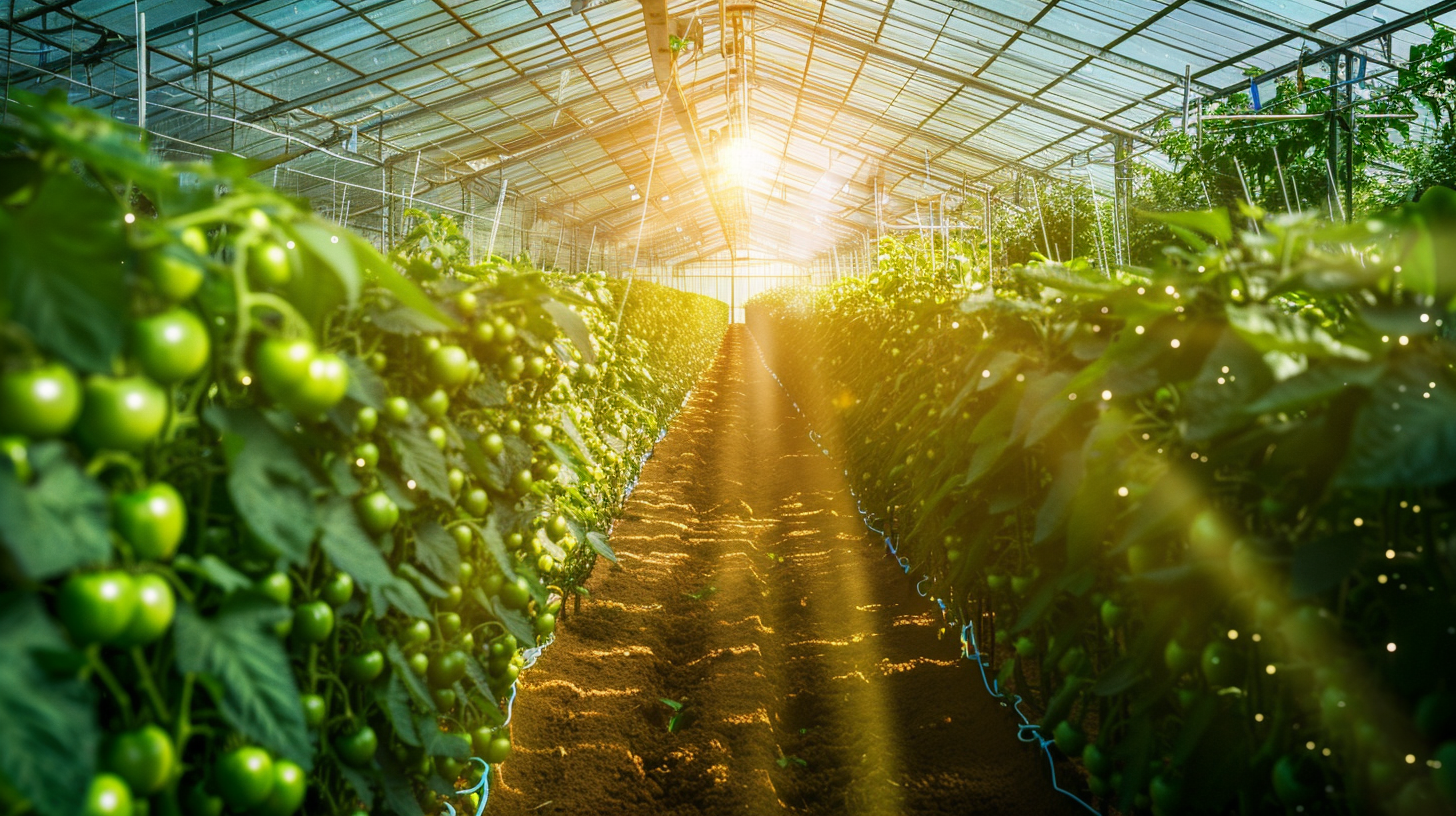
Drip Fertigation Greenhouse Crops: 2026 Guide to Smart Efficiency
Target keyword: drip fertigation greenhouse crops
Drip fertigation greenhouse crops solutions deliver precise water and nutrients directly to the root zone.
Paired with a Smart Fertigation System, growers automate dosing, monitor pH/EC and moisture in real time, and lift yield with more consistent crop quality.
Short Excerpt
This 2026 guide explains how drip fertigation greenhouse crops projects improve water and nutrient efficiency,
how smart pH/EC monitoring stabilizes recipes across zones, and what to check to reduce clogging, drift, and uneven distribution.
I. Introduction and Background
In modern greenhouses, drip fertigation greenhouse crops practices reduce evaporation and runoff while improving nutrient uptake. Instead of fixed calendar watering, smart scheduling uses feedback from moisture, pH, EC, and temperature to match real crop demand.
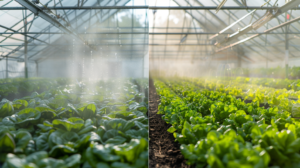
II. Practical Comparison: Traditional vs. Drip Fertigation Greenhouse Crops
Compared with overhead sprinklers or hose watering, drip fertigation greenhouse crops systems focus each liter of water and each gram of fertilizer into the active root zone—improving uniformity and reducing leaf wetness.
| Feature | Traditional Irrigation | Drip Fertigation |
|---|---|---|
| Water Use Efficiency | ~60–70% | ~90–95% |
| Nutrient Delivery | Broadcast | Targeted to root zone |
| Labor Requirements | High | Low (automated) |
| Disease Risk | Higher (wet foliage) | Lower (dry canopy) |
| Yield & Quality Stability | More variable | More consistent |
Further reading: FAO guidance on efficient irrigation and fertigation practices.
III. What Smart Fertigation Adds
A Smart Fertigation System strengthens drip fertigation greenhouse crops performance with sensors, automation, and closed-loop control.
Recipes can adjust by crop stage, climate change, and substrate feedback—rather than staying fixed.
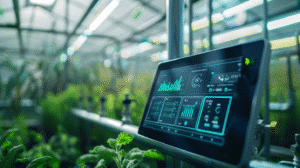
- Real-time monitoring: moisture, pH, EC, temperature by key zones.
- Automated control: dynamic irrigation timing and dosing setpoints.
- Precise nutrient delivery: timed injection reduces leaching and waste.
- Remote management: dashboards, alarms, logs, and recipe history.
- Data logging: traceability and benchmarking across seasons.
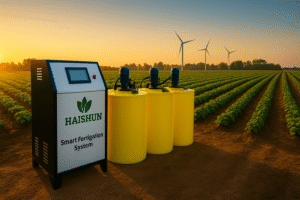
IV. Key Considerations When Choosing a System
When upgrading drip fertigation greenhouse crops projects, look beyond headline flow rates.
Prioritize scalability, integration, and serviceability to reduce long-term operating risk.
- Scalability: zone count today and expansion options tomorrow.
- Sensor quality: accuracy, calibration workflow, replacement cycle.
- Ease of use: permissions, alarm history, and recipe logs.
- Integration: climate control, lighting, tanks, pumps, valves.
- Support & training: onboarding, remote diagnostics, seasonal tuning.
- Total cost of ownership: installation, maintenance, and software fees.
Integration checklist (expand)
- Compatibility with mainline, manifolds, and zone valves.
- Proportional dosing + reliable backflow prevention.
- Filter sizing vs emitter spec and local water quality.
- Data export (CSV/API) for agronomy audits and benchmarking.
V. Crop-Specific Guidance
Smart recipes still depend on crop type and stage. The ranges below are starting points for greenhouse planning;
local trials should refine targets for your drip fertigation greenhouse crops program.
| Crop | Typical pH | Typical EC (dS/m) | Notes |
|---|---|---|---|
| Tomatoes | 6.0–6.5 | 2.0–3.5 | High K/Ca; watch blossom-end rot (Ca). |
| Peppers | 6.0–6.8 | 1.5–2.5 | Avoid over-watering; reduce root-rot risk. |
| Cucumbers | 5.5–6.5 | 2.0–3.0 | Keep moisture consistent for uniform fruit. |
| Strawberries | 5.5–6.5 | 1.8–2.2 | Watch Fe deficiency; ensure drainage. |
| Herbs | 6.0–7.0 | 1.0–2.0 | Lower concentrations; adjust by species. |
Crop nutrition references: IFAS.
VI. Common Issues & Maintenance Tips
Even well-designed drip fertigation greenhouse crops systems need routine checks.
Most problems trace back to filtration, pressure balance, or sensor drift.
- Emitter clogging: right filtration + periodic flushing; consider acid where needed.
- Uneven distribution: verify pressure regulation, manifold balancing, and line lengths.
- Nutrient imbalance: spot-check pH/EC; adjust stock solutions and blending strategy.
- Sensor drift: follow a scheduled calibration and replacement cycle.
- Leaks: inspect fittings and laterals after major crop/climate changes.
VII. Conclusion & Next Steps
Drip fertigation greenhouse crops solutions deliver targeted moisture and nutrients, while smart control automates scheduling, dosing, monitoring, and alerts. The result is higher yield consistency, tighter quality, and better use of every cubic meter of water.
Want a greenhouse fertigation layout and bill-of-materials matched to your crop zones?
Visit Haishun or contact us via email.
You can also reach the team via the contact page.
VIII. Frequently Asked Questions
Is drip fertigation suitable for small greenhouses?
Yes. Start with a single zone and scale pumps, manifolds, and sensors as area expands.
How often should I flush lines to prevent clogging?
Weekly flushing plus filter maintenance is a common baseline; increase frequency for hard or dirty water.
Can Smart Fertigation run different recipes per crop zone?
Yes. Multi-zone control supports different EC/pH targets and dosing ratios by crop stage and zone demand.
Do I still need manual EC/pH checks?
Yes. Periodic spot checks confirm sensor accuracy and detect drift early.
What’s the typical ROI timeline?
Commonly 12–18 months, depending on input prices, yield stability, and quality uplift.