Top 3 Fertigation System Suppliers for Overseas Farms (2025)
Target keyword: fertigation system suppliers
Short Excerpt
This 2025 shortlist helps overseas growers compare fertigation system suppliers by dosing accuracy, pH/EC control, remote apps, spares, training, and total cost of ownership—so projects deploy faster with fewer operational risks.
Why smart fertigation matters for overseas farms
Overseas projects usually face a hard mix of constraints: limited on-site agronomy labor, long spare-part lead time, inconsistent water quality,and the need to prove ROI quickly. That is why modern fertigation system suppliers are evaluated less by “equipment price” and more by stability, supportability, and repeatable outcomes.
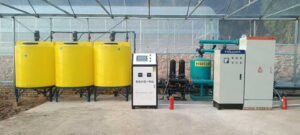
A smart fertigation setup typically combines dosing tanks, multi-channel pumps, inline mixing, pH/EC probes, flow monitoring, and irrigation zoning.
When these components are integrated correctly, farms reduce input waste, stabilize crop quality, and scale operation blocks without adding headcount.
Internal references:
Smart Fertigation System Buyer’s Guide·
Fertigation System Comparison
Selection criteria to compare fertigation system suppliers
Use the checklist below to screen fertigation system suppliers for overseas deployment. It is designed for integrators, growers,and project owners who want fewer commissioning delays and fewer “hidden” operating costs.
- Dosing accuracy & stability: closed-loop EC setpoints, flow compensation, reliable pump control.
- pH/EC monitoring quality: industrial probes, calibration workflow, safe acid/base dosing design.
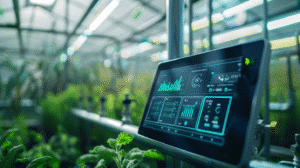
- Remote control: app/web dashboard, alarms, data logging, OTA update capability.
- Build & spares: filtration compatibility, anti-scaling, globally available spare kits.
- Training & commissioning: multilingual manuals, remote troubleshooting, on-site startup support.
- Compliance: chemical storage safety, backflow prevention, IP rating for outdoor conditions.
See a quick comparison table
| Dimension | Basic / Traditional | Smart fertigation | Why it matters overseas |
|---|---|---|---|
| Nutrient control | Manual mixing | Sensor-based dosing | Stable EC reduces waste and crop stress |
| Water management | Timed irrigation | Moisture + weather integration | Improves drought resilience and uniformity |
| Operations | Manual checks | Remote alerts + logging | Less dependence on on-site specialists |
| Scale-up | Hard to replicate | Recipe & zone templates | Faster rollout across multiple blocks |
Top 3 supplier archetypes in 2025
Instead of arguing brand names, it is more reliable to compare supplier “archetypes” (what they are built for).
Use this framework to shortlist fertigation system suppliers that match your crop, climate, and service model.
#1 Global OEM platform
Best for: large open-field crops, multi-block dosing, SCADA-style integration.
- Strength: proven industrial architecture, predictable parts pipeline.
- Remote: role-based access, multi-site dashboards, alarm history.
- Typical band: USD 9k–35k (ex-works), depending on channels/flow.
#2 Greenhouse specialist
Best for: soilless/substrate, EC steering, drain analytics and recipes.
- Strength: crop steering logic, higher precision programs.
- Support: commissioning + crop training (tomato, cucumber, berries).
- Typical band: USD 12k–45k (ex-works) with integrations.
#3 Cost-effective open-field specialist
Best for: orchards/vineyards upgrading from timers to smart control.
- Strength: compact dosing, easier maintenance, spare kits.
- Remote: start/stop, schedules, SMS/WhatsApp alerts.
- Typical band: USD 3k–12k (ex-works) for small-to-mid blocks.
More details:
Fertigation System Comparison
Contact Haishun
TCO & ROI checkpoints for overseas deployment
A supplier is “good” only if total cost of ownership stays under control after shipping. When shortlisting fertigation system suppliers, validate these numbers before comparing quotations.
- Capex drivers: number of channels, sensors, filtration, control cabinet, communications.
- Opex drivers: probe replacement, pump maintenance, operator time, energy.
- Savings logic: stable EC/pH reduces fertilizer waste; moisture feedback reduces over-irrigation.
- Uptime: alarms + spare kits protect peak-season output.
Suggested reading:
Fertigation Cost & ROI
Risks & compliance essentials
Overseas operations magnify small failures. Serious fertigation system suppliers should provide clear safety guidance and practical mitigation plans.
- Backflow prevention: check valves / air gaps per local codes.
- Chemical handling: PPE, bunded tanks, and MSDS practice.
- Water quality: filtration and anti-scaling; align with
Fertigation & Water Quality. - External reference:
FAO irrigation & nutrient resources.
When smart fertigation is not the best fit
- Very small plots with minimal variability and low input intensity.
- No reliable power/network and no mitigation plan (solar + offline control + local logging).
- Extreme salinity or contamination without adequate pre-treatment.
If you are comparing fertigation system suppliers for an overseas project, prepare your crop, area (ha), water source, and target irrigation flow.Then use the checklist above to avoid rework at commissioning.
Contact Haishun for a project-ready configuration outline.
Frequently Asked Questions
What is a smart fertigation system?
A smart fertigation system automates irrigation and nutrient dosing using sensors (pH/EC, flow, moisture) and control software to improve consistency, reduce waste, and support scalable operations.
How do I compare fertigation system suppliers for overseas farms?
Compare dosing stability, pH/EC probe quality, remote app reliability, spare-part readiness, commissioning support, and total cost of ownership—not only equipment price—when evaluating fertigation system suppliers.
Can fertigation be controlled remotely?
Yes. Many modern systems provide mobile and web dashboards for scheduling, telemetry, alarms, and multi-site management.
What budget range should I plan for overseas projects?
Compact orchard solutions are often around USD 3k–12k ex-works, while larger multi-channel OEM dosing skids can be USD 9k–35k+ ex-works, plus freight, duties, installation, and training.