Game-Changing Smart Fertigation in 2026: What a Smart Fertigation System Really Delivers
Focus Keyword: smart fertigation system
Key takeaway in one minute
In 2025, smart fertigation is no longer “optional tech.” It is a practical way to reduce input waste, stabilize crop performance, and manage irrigation remotely—especially in water-scarce or labor-limited farms.
I. Why smart fertigation matters in 2025
Farms are facing a clear equation: higher costs + tighter water limits + less predictable weather. Smart fertigation helps convert irrigation from “manual guesswork” into “data-driven execution.”
A smart fertigation system is especially valuable when you need stable EC/pH targets, consistent dosing, and remote control across multiple zones.
For sustainable agriculture, the FAO regularly highlights improving water and nutrient efficiency as a key direction for resilient farming.
II. How a smart fertigation system works
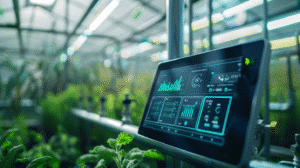
- Sensing: soil moisture, EC/pH, flow rate, pressure, tank levels, and weather inputs.
- Dosing: proportional injection or recipe-based “crop programs” by growth stage.
- Control: automated valves/pumps execute schedules and zone switching.
- Remote management: dashboards + alerts help teams react faster and reduce downtime.
- Logs & reporting: water/fertilizer consumption and performance trends enable optimization.
The goal is simple: keep delivery stable, track what happened, and make decisions with evidence—not intuition.
III. Selection checklist
| Check item | What to confirm | Why it matters |
|---|---|---|
| Scalability | How many zones now / later, multi-block support | Avoids re-buying as the farm expands |
| Water quality fit | Filtration grade, clogging risk, injector compatibility | Protects uptime and distribution uniformity |
| Ease of use | Operator UI, local language, SOP & training | Reduces human error and troubleshooting time |
| Offline stability | Controller runs programs without internet | Critical for remote farms and weak networks |
| Service & spares | Spare list, warranty, remote support workflow | Controls project risk for overseas sites |
If your project is drip-based, make sure the selection considers filtration + flushing strategy as a package, not as separate items.
IV. Best scenarios
- Open-field drip: maize, cotton, sugarcane, potatoes, vegetables.
- Greenhouses: strict EC/pH control for berries, tomatoes, cucumbers, leafy greens.
- Orchards/vineyards: staged nutrition, better uniformity, long-term soil management.
- Water-scarce/saline regions: efficiency becomes the main profit lever.
V. Common issues and fixes
- Uneven distribution: calibrate injectors + verify by zone sampling; stabilize pressure.
- Sensor drift: periodic calibration + spare probes; set EC/pH deviation alerts.
- Clogging: match filtration to water reality; flushing plan; compatible fertilizers.
- Operator errors: SOP + role permissions; lock core recipes; simple UI.
- Internet loss: confirm local controller can continue schedules offline.
VI. Cost savings & ROI logic
The ROI is usually not one single factor. It is a combination of: (1) input savings, (2) yield stability, (3) labor reduction, and (4) fewer downtime events.
For high-value crops, one season of improved uniformity can justify investment faster than expected—especially when water and fertilizer prices trend upward.
VII. FAQ
What is a smart fertigation system?
A smart fertigation system automates fertilizer injection into irrigation water using sensors, controllers, and dosing logic to keep delivery stable and measurable.
How does it reduce fertilizer and water waste?
By applying small, frequent doses to the root zone and adjusting schedules based on real conditions, losses from runoff, leaching, and over-irrigation are reduced.
Is it only for large farms?
No. Modular designs allow small and medium farms to start simple and expand zones/sensors later.
What payback period is realistic?
It depends on crop value and baseline efficiency. Many farms target 2–4 seasons by combining input savings, fewer labor hours, and steadier yields.
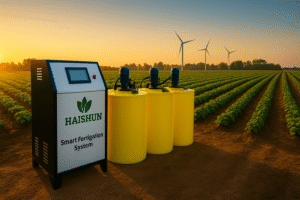
If you are planning an overseas project and need a reliable configuration path (filtration + dosing + control + training), explore Haishun’s solution here: Smart Fertigation System.