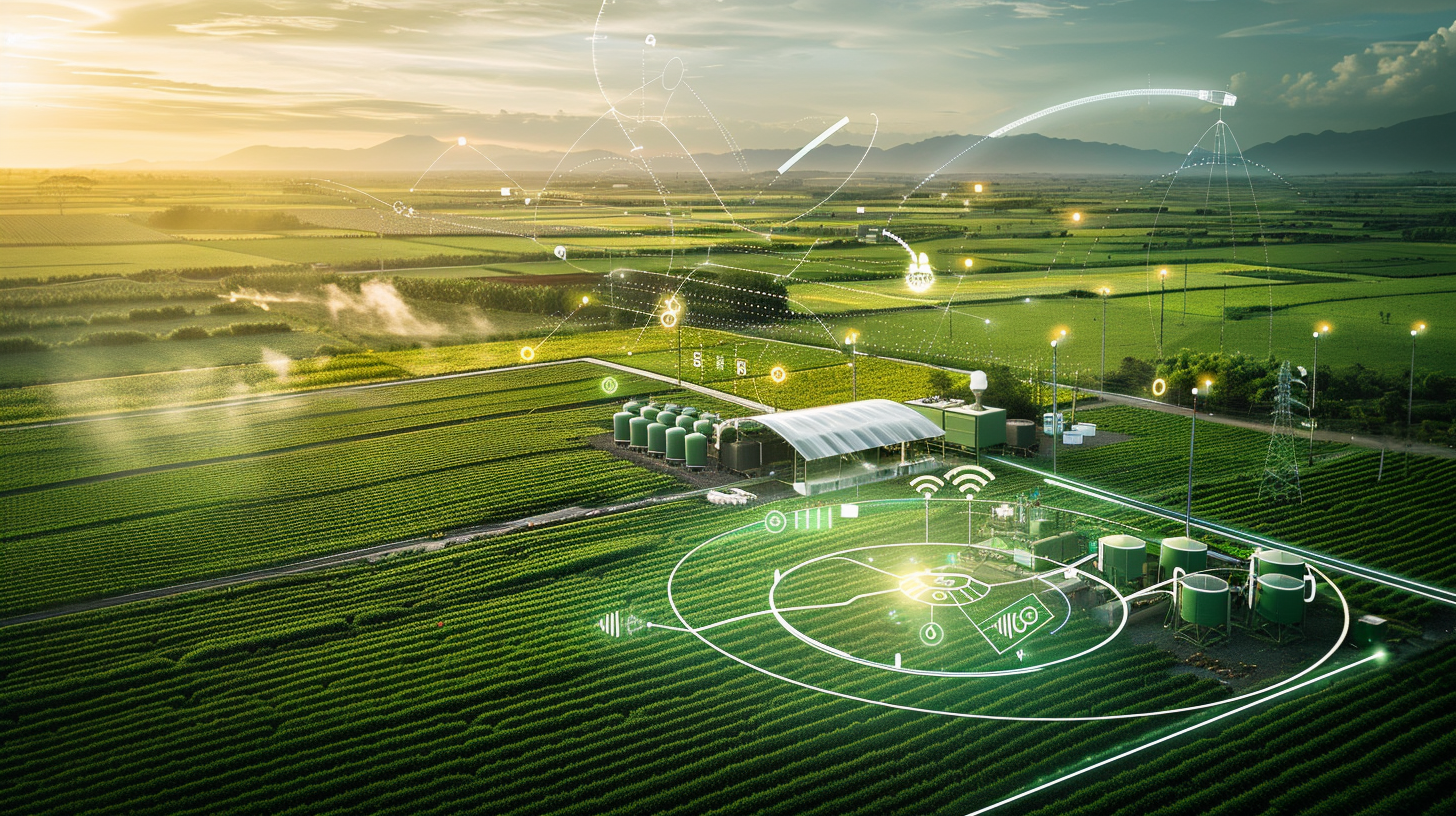
Smart Fertigation System: Buyer Checklist, ROI & Setup (2026)
A decision-maker friendly guide to evaluate a smart fertigation system for farms, orchards, and greenhouses—without guesswork.
Quick Summary
A smart fertigation system automates nutrient dosing through irrigation with real-time EC/pH monitoring, stable recipes, and remote control.
Use the checklist below to verify dosing accuracy, filtration, automation reliability, scalability, reporting, and service support—then estimate ROI in a simple, realistic way.
I. What a smart fertigation system actually solves
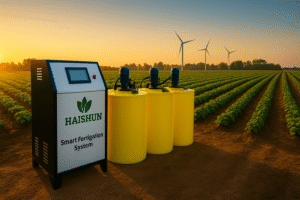
Many farms lose money not because inputs are “too expensive”, but because water and nutrients are applied with inconsistency:over-irrigation, under-irrigation, uneven fertilizer concentration, and delayed reaction to weather and crop stages.
A smart fertigation system addresses this by standardizing how recipes are mixed, how zones are irrigated,
and how EC/pH and flow are monitored—so teams can repeat “good results” instead of repeating guesswork.
External reference (nofollow): FAO – Agriculture & water management
II. Traditional vs smart fertigation (quick comparison)
| Item | Traditional | Smart fertigation system |
|---|---|---|
| Recipe stability | Manual mixing, human variation | Repeatable dosing with calibration logic |
| EC/pH control | Checks are periodic, slow reaction | Real-time monitoring + alarms + correction |
| Labor efficiency | More field trips and manual adjustments | Remote control, scheduled irrigation by zone |
| Traceability | Logs are incomplete | Exportable reports per zone (water/fertilizer/time) |
III. How a smart fertigation system works
In simple terms, a smart fertigation system combines:
dosing pumps (or injectors), fertilizer tanks, filtration, flow measurement, EC/pH sensors, control software,
and irrigation valves/zones—so water and nutrients are delivered precisely to the root zone.
Core components (quick list)
- Fertilizer tanks + dosing pumps / injectors
- EC/pH sensors (with calibration workflow)
- Flow meter + pressure monitoring
- Filtration (sand/disc/screen) + backwash logic
- Controller + cloud / app remote control
- Zone valves and irrigation scheduling
IV. Buyer checklist: 10 checks before you buy
- Dosing accuracy: Can the system repeat the same recipe with minimal EC deviation?
- EC/pH closed-loop control: How often does it sample? How does it correct drift?
- Sensor credibility: What is the calibration workflow and replacement cycle?
- Filtration match: Does the filtration grade match your water source and emitter type?
- Backwash & maintenance: Is backwash automated and logged? Are reminders clear?
- Zone scalability: Can you expand from pilot to full farm without rebuilding everything?
- Remote reliability: What happens during power loss / network loss?
- Reporting: Can you export per-zone water, fertilizer, runtime, alarms?
- Spare parts: Pump/sensor/valve lead time, and standard spare kit list?
- Service & training: Is commissioning + training standardized and documented?
Want Haishun to run this checklist based on your farm data (crop + water + zones)?
Send requirements here.
V. Common problems & how to avoid them
- Emitter clogging: usually filtration mismatch, unstable water source, or poor maintenance workflow.
- Unstable EC/pH: sensor placement/calibration issues, inconsistent stock solution, or incorrect dosing logic.
- “Nice dashboard, weak field result”: system looks good, but lacks reliable closed-loop control and reporting discipline.
- Hard to expand: zone count and control architecture were not designed for scaling.
VI. Haishun solution approach (phased delivery)
Haishun typically recommends a phased approach for a smart fertigation system:
start with a pilot zone to validate stability and ROI, then scale to more zones with the same architecture.
This reduces risk, protects cashflow, and keeps the system consistent.
What Haishun needs to propose the right configuration
- Crop type + growth stage + target quality
- Farm area, number of irrigation zones, layout preference
- Water source + basic water report (if available)
- Existing irrigation (drip/micro) and pipe sizes
- Power supply + network conditions
- Budget range and preferred delivery timeline
VII. FAQ
1) What is a smart fertigation system?
A smart fertigation system automates fertilizer dosing through irrigation using sensors, flow control, zone scheduling, and remote monitoring to improve consistency and efficiency.
2) Can it work with existing drip irrigation?
Yes. Most systems can integrate with standard drip or micro systems. The key is matching filtration, zone control, and pressure requirements.
3) Where does ROI come from?
Typical ROI drivers include water savings, fertilizer savings, reduced labor, and improved crop consistency that lowers losses and raises marketable yield.
4) What should I verify during a demo?
Focus on dosing repeatability, EC/pH stability, filtration and maintenance workflow, scalability, reporting, and support/parts availability.