Smart Precision Irrigation: Save 50% Water and Boost Farm Yields
Facing water scarcity and rising farming costs? A Smart Precision Irrigation System is the modern solution for sustainable farming. By delivering water directly to plant roots, drip irrigation reduces waste, improves crop quality, and saves up to 50% of water compared to traditional methods. In this guide, Haishun AgriTech shares proven strategies to design, install, and optimize your system.
What is Smart Precision Irrigation?
Smart precision irrigation combines drip tape with modern sensors and controllers. Thin-walled tubing with integrated emitters delivers precise amounts of water directly to crop roots. This system minimizes evaporation and runoff, ensuring crops receive exactly what they need. According to FAO, precision irrigation systems can increase water-use efficiency by 40–60% compared to conventional methods.
Why Farmers Choose Smart Irrigation
- Water Conservation: Reduce water usage by up to 50%.
- Higher Yields: Consistent soil moisture leads to healthier crops.
- Weed Control: Targeted watering reduces unwanted weed growth.
- Sustainability: Long-term soil health and resource savings.
How to Set Up Your Smart Precision Irrigation System
Step 1: Plan Your Layout
Assess your field size, crop type, and spacing. Use our product range to choose the right drip tape for your operation.
Step 2: Gather Supplies
- Smart Drip Tape with integrated emitters
- Mainline Tubing
- Filters & Pressure Regulators
- Connectors & Control Valves
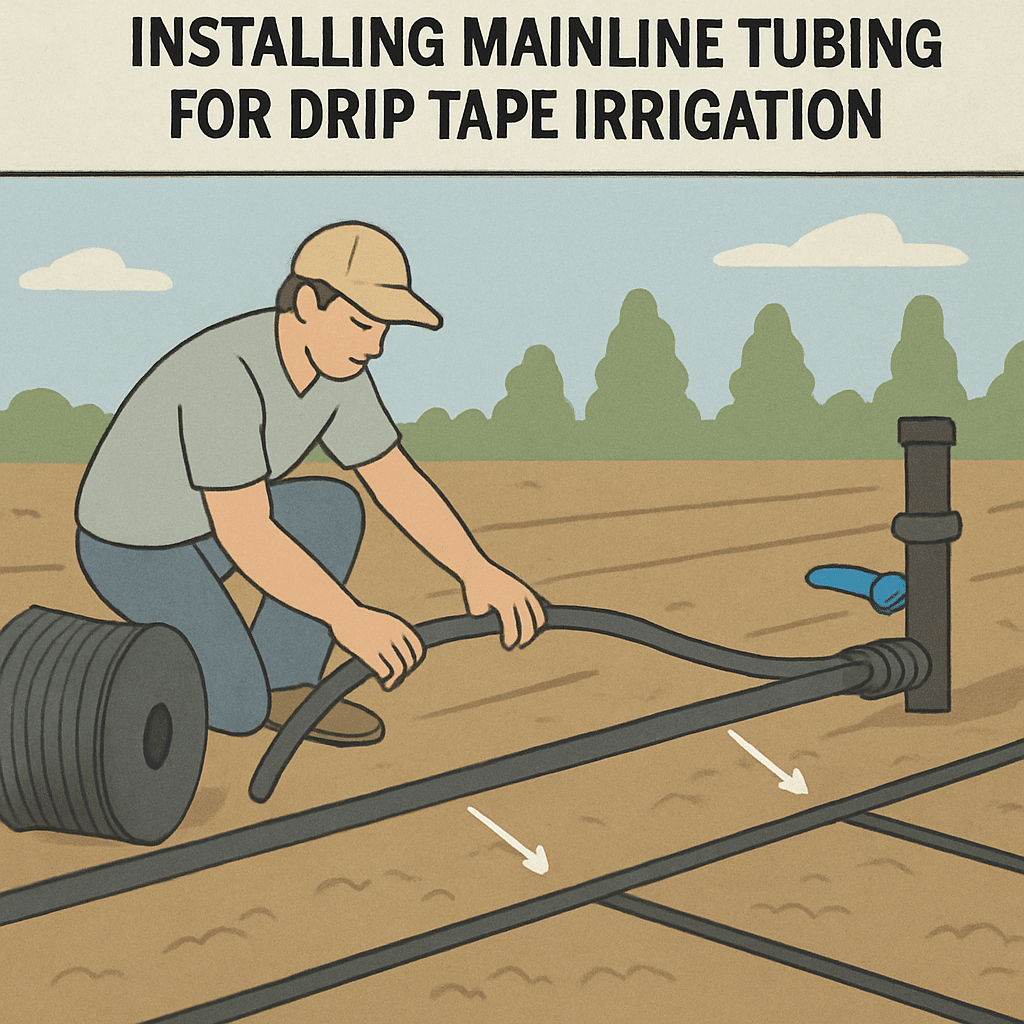
Step 3: Install Mainline Tubing

Lay mainline tubing along crop rows and connect it to your water source. Add filters and regulators to maintain clean water and steady pressure.
Step 4: Connect Drip Tape
Attach drip tape to the mainline using connectors. Keep the tape flat and evenly spaced for uniform water distribution.
Step 5: Test the System
Turn on the water, check for leaks, and confirm even distribution across all emitters. Adjust as needed before planting.
Tips to Optimize Irrigation Performance
- Monitor: Regularly check for leaks, clogs, or pressure issues.
- Timing: Irrigate early mornings or evenings to minimize evaporation.
- Smart Sensors: Add soil moisture sensors or automated timers for data-driven irrigation.
Discover more about our smart farming approach and how Haishun supports farmers globally.
Key Benefits of Smart Precision Irrigation
- Water Efficiency: Critical in regions with drought and water scarcity.
- Improved Crop Quality: Uniform watering leads to higher-grade harvests.
- Cost Savings: Reduced bills, higher ROI, and stronger long-term profits.
Conclusion
A Smart Precision Irrigation System is more than a tool—it’s a farming strategy. With careful planning, quality equipment, and ongoing optimization, farmers can achieve better yields, conserve water, and future-proof their business. Visit our Contact page to explore customized irrigation solutions from Haishun AgriTech.
Frequently Asked Questions
1. What makes smart precision irrigation different?
It combines drip tape with automation, delivering precise water amounts while saving time and resources.
2. How much water can be saved?
Up to 50% compared to conventional methods, depending on crop and soil.
3. Is it suitable for all farms?
Yes, from small greenhouses to large open fields, smart irrigation adapts to all scales.
4. What about maintenance?
Routine flushing, filter cleaning, and occasional tape replacement ensure reliability.
5. Can it be automated?
Yes, with soil sensors and timers, farmers can automate irrigation fully.
6. How long does the system last?
High-quality drip tape lasts 3–5 years with proper care.
7. Does it improve crop profitability?
Yes, higher yields, better crop quality, and lower water bills all boost profitability.