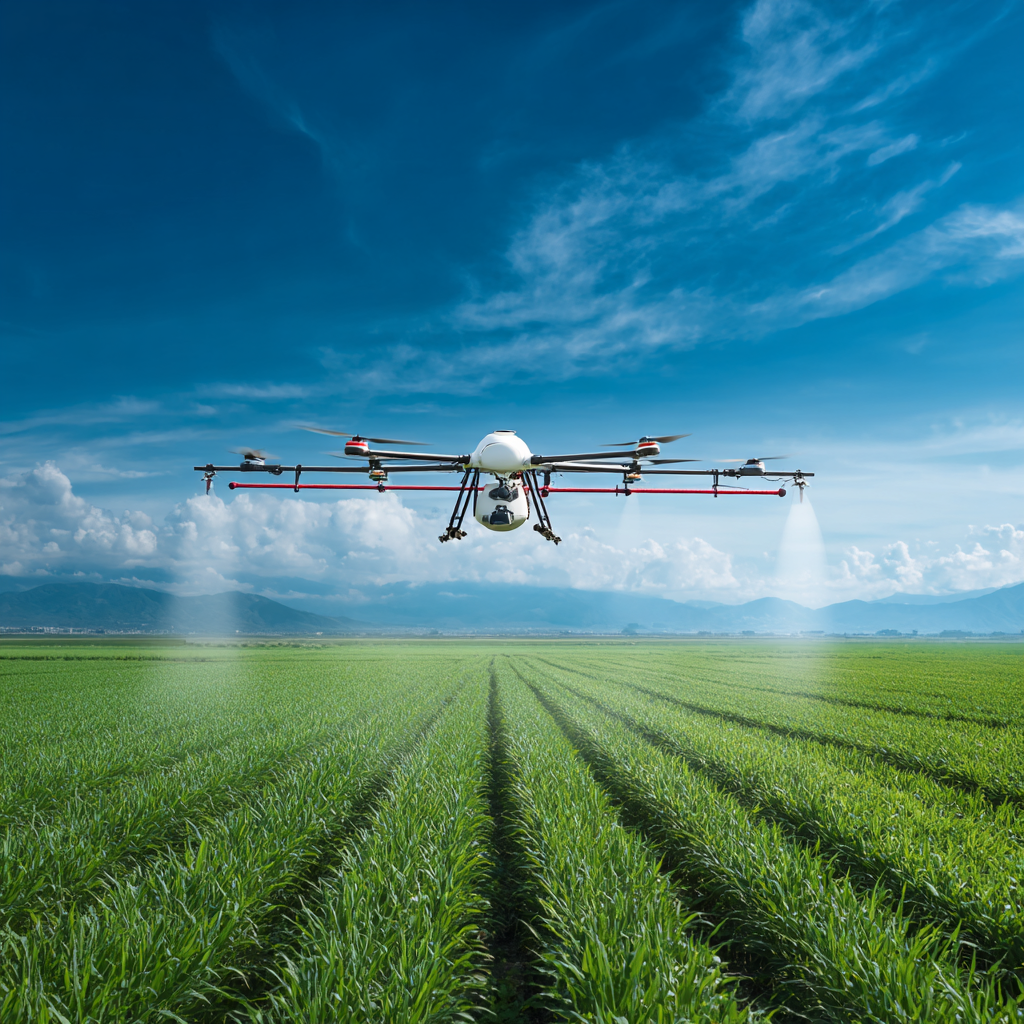
Agriculture Drones: Are Crop Monitoring, Spraying & Pest Detection the Future?
2025-09-14by Hai Shun
Agriculture Drones: Are Crop Monitoring, Spraying & Pest Detection the Future?
By Haishun AgriTech · Last updated:
Are you grappling with inefficient crop monitoring, uneven spraying, or delayed pest detection in your agricultural operations? These challenges often lead to increased costs, reduced yields, and ultimately, diminished profitability. Agriculture drones offer a cutting-edge solution to these problems, providing precision and efficiency that traditional methods cannot match.
Key takeaways
- Smarter crop monitoring & early risk detection
- Precision spraying that reduces cost & waste
- Actionable data for higher, more stable yields
Explore our Home,About,,Product andContact pages.
The Rise of Agriculture Drones: A New Era in Farming
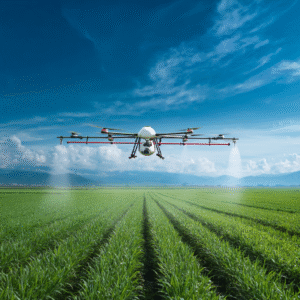
The answer to whether agriculture drones are the future of farming is a resounding yes. Equipped with advanced sensors, GPS technology, and sophisticated software, these unmanned aerial vehicles (UAVs) are revolutionizing agriculture by offering precision, efficiency, and cost-effectiveness in crop monitoring, spraying, sowing, and pest detection. They are not just futuristic gadgets; they are practical tools that can significantly improve crop yields, reduce resource waste, and enhance overall farm management. We at Haishun have seen the impact firsthand.
What exactly is an agriculture drone? Simply put, it’s an unmanned aerial vehicle designed specifically for agricultural applications. Think of it as a sophisticated flying robot equipped with cameras, sensors, and sometimes even sprayers or seed dispensers. Unlike traditional methods that rely on manual inspection or large, expensive machinery, agriculture drones provide a bird’s-eye view of your fields, allowing you to identify problems early and address them precisely.
How Agriculture Drones Work
Imagine a flock of intelligent birds, each equipped with the ability to see, analyze, and respond to the needs of your crops. That’s essentially how agriculture drones operate. They fly autonomously over fields, collecting data and performing tasks with remarkable precision. Here’s a breakdown of the key components and their functions:
- GPS and Navigation: Pre-programmed flight paths ensure repeatable coverage.
- Sensors and Cameras: RGB, multispectral, thermal, and optional LiDAR provide rich agronomic signals.
- Onboard Computer & Software: Processes data and streams insights to a ground station.
- Spraying/Sowing Systems: Precise application of inputs where and when needed.
For technical primers, see UF/IFAS EDIS and PrecisionAg.
Applications in Modern Farming
- Crop Monitoring: Detect growth patterns and anomalies early.
- Precision Spraying: Even application reduces waste and drift.
- Pest Detection: Multispectral imagery flags issues before they spread.
- Irrigation Management: Thermal maps highlight water stress.
- Damage Assessment: Rapid post-storm surveying for recovery planning.
Application Levels: From Basic to Advanced
- Basic (Visual): RGB mapping for obvious issues.
- Intermediate (Multispectral): Stress diagnostics and variable-rate prescriptions.
- Advanced (Precision Application): Targeted spraying/sowing for maximum efficiency.
Advantages of Using Agriculture Drones
- Precision: Pinpoint inputs; reduce over/under-application.
- Efficiency: Cover hectares in minutes; lower labor costs.
- Cost Reduction: Optimize inputs and time.
- Improved Crop Health: Early detection → timely intervention.
- Sustainability: Less waste, better stewardship.
- Data-Driven: Decisions backed by field intelligence.
Haishun Agriculture Drones: Precision & Efficiency
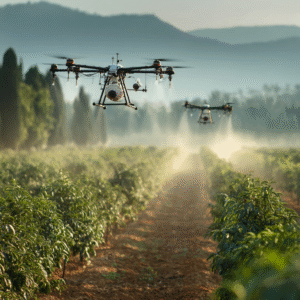
We offer reliable, field-tested solutions featuring high-resolution imaging, automated flight planning, durable spraying systems and real-time analytics, built for vineyards, orchards and large-scale row crops.
- High-Resolution Imaging (RGB + multispectral)
- Automated Flight Planning with GPS precision
- Integrated Spraying System up to 10 L
- Real-Time Data transfer and analysis
How to Choose the Right Haishun Agriculture Drone
- Farm Size: Longer flight time & larger tanks for larger areas.
- Crop Type: Match sensors to agronomic needs.
- Budget: Balance features vs. lifecycle ROI.
Haishun Agriculture Drone Specifications
| Feature | Specification |
|---|---|
| Flight Time | Up to 45 minutes |
| Spraying Capacity | Up to 10 liters |
| Imaging Resolution | Up to 20 MP |
| Operating Temperature | -10°C to 40°C |
| GPS Accuracy | ± 1 m |
Common Problems & Solutions
| Problem | Solution |
|---|---|
| Uneven Spraying | Use precision nozzles + calibrated speeds. |
| Hard-to-Detect Pests | Deploy multispectral scouting missions. |
| High Monitoring Labor | Automate flights; batch analytics. |
Instructions for Use
- Plan flight paths with the mission app.
- Fill spray tank per label guidance.
- Launch; monitor progress; log flight.
- Analyze maps; action prescriptions.
Tip: Calibrate sensors regularly for consistent accuracy.
Ordering & Sample
| Item | Details |
|---|---|
| MOQ | 1 unit |
| Packaging | Reinforced foam + crate |
| Lead Time | 2–4 weeks |
| Payment | T/T, L/C |
| Shipping | Air or sea freight |
| Sample Policy | Contact us for availability |
Quality Control & R&D
Units are tested for airflow, spray uniformity, and flight stability before shipment; firmware is maintained with continuous updates to ensure reliability in demanding field conditions.
Ready to see drones in action?
Contact Haishun or browse our Product .
FAQ: Agriculture Drones
1. What is an agriculture drone?
An agriculture drone is a UAV for monitoring, spraying and data collection—improving accuracy and efficiency vs. manual scouting.
2. How do drones reduce costs?
By optimizing agrochemical use and labor, drones shorten scouting time and prevent over-application.
3. Are they hard to operate?
Modern mission apps automate takeoff, flight paths and landing—no advanced piloting skills required.
4. Do drones replace irrigation?
No. They complement irrigation by surfacing water-stressed zones for targeted adjustments.
5. Which crops benefit?
Orchards, vineyards, row crops and greenhouse systems all benefit from aerial monitoring and precision tasks.
6. Are drones sustainable?
Yes—precision application reduces drift and waste, improving environmental outcomes.
7. Where to learn more?
See USDA ERS and UF/IFAS EDIS.