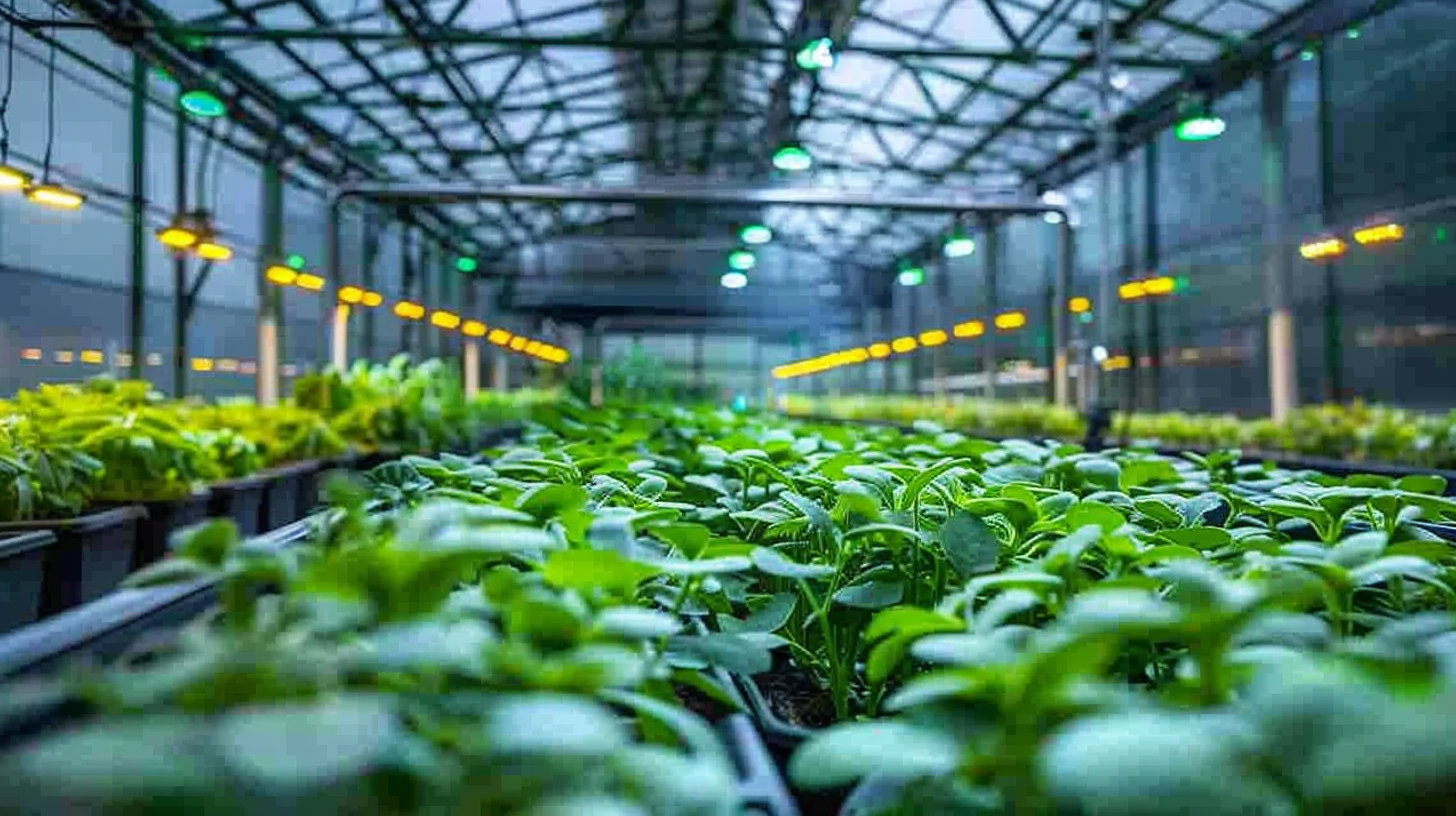
Fertigation Revolution : Why Top Farms Are Switching Fast
Across the world, leading farms are under pressure to grow more with less — less water, less fertilizer, and less labor. Instead of relying on manual broadcasting, many are joining the
Fertigation Revolution and upgrading to smart fertigation systems that transform irrigation into a precise, data-driven process.
This article explains how the Fertigation Revolution is changing modern agriculture, compares traditional and smart approaches, and outlines key points to consider when choosing the right system for your farm.
If you already know the basics and want to see a turnkey solution, explore the Haishun Smart Fertigation System designed for modern farms and greenhouses.
Table of Contents
- I. Introduction to the Fertigation Revolution
- II. Fertigation Revolution vs. Traditional Fertilization
- III. What Is a Smart Fertigation System?
- IV. Key Considerations When Choosing a System
- V. Common Problems & Practical Solutions
- VI. Haishun Smart Fertigation Solutions
- VII. FAQ
- VIII. Contact & Brand Information
I. Introduction to the Fertigation Revolution
Traditional fertilization methods usually involve spreading granular fertilizer by hand or tractor, then waiting for rain or irrigation to move nutrients into the root zone. This approach is simple but often leads to uneven distribution, nutrient losses, and higher environmental impact.
The Fertigation Revolution improves efficiency by injecting water-soluble fertilizers into the irrigation system so that nutrients travel directly with the water. Today, smart fertigation systems push this concept further by using sensors, control units and software to fine-tune every irrigation event.

According to the FAO, agriculture accounts for about 70% of global freshwater withdrawals. Improving irrigation and fertigation efficiency is one of the most effective ways to reduce water stress while sustaining crop yields — a key driver of the Fertigation Revolution.
II. Fertigation Revolution vs. Traditional Fertilization
The table below highlights how the Fertigation Revolution compares with traditional fertilization and basic fertigation systems.
III. What Is a Smart Fertigation System?
A smart fertigation system is at the heart of the Fertigation Revolution. It is an integrated solution that combines irrigation hardware, fertilizer tanks, sensors, control valves and software. It continuously monitors key parameters and automatically adjusts irrigation and fertilization to keep crops in their optimal growth zone.
- Real-time monitoring of soil moisture, EC and pH, plus weather data.
- Automated nutrient dosing through injection pumps programmed for each crop.
- Remote control via smartphone, tablet or desktop dashboard.
- Data analytics to optimise long-term irrigation and fertilisation strategy.
IV. Key Considerations When Choosing a System
To benefit fully from the Fertigation Revolution, farms should carefully evaluate each project before investing in a smart system.
- Crop type and area: capacity should match crop water needs and total hectares.
- Water quality: filtration and corrosion resistance are essential.
- Integration: the system must work with existing pumps, filters and pipe layout.
- Automation level: from simple scheduling to fully sensor-driven control.
- Service & training: local technical support and operator training.
- ROI and scalability: expected payback time and future expansion possibilities.
V. Common Problems & Practical Solutions
Even smart systems face real-world challenges. Here are common issues and recommended solutions for farms embracing the Fertigation Revolution.
VI. Haishun Smart Fertigation Solutions
Haishun provides turnkey smart fertigation systems that integrate pumps, tanks, control cabinets, filters and sensors into a single solution. Each project is engineered according to local crops, climate and infrastructure so that farms can capture the full value of the Fertigation Revolution.
- Complete integration: irrigation control, fertilizer dosing and data logging in one platform.
- Scalable design: suitable for greenhouses, orchards and large open-field projects.
- Professional support: design, installation, on-site training and remote service.
Learn more on the Haishun Smart Fertigation System product page.
VII. FAQ
1. What is the Fertigation Revolution?
The Fertigation Revolution refers to the global shift from manual fertilization to data-driven smart fertigation systems that deliver water and nutrients with precision.
2. How much can a smart fertigation system save?
Depending on the project, farms typically see up to 30% water savings and up to 40% fertilizer savings, together with more stable yields.
3. Which crops can benefit from the Fertigation Revolution?
Smart fertigation is widely used in orchards, vegetables, vineyards, berry farms and greenhouses — any crop where precise irrigation is possible.
Haishun
Your Reliable Partner in Smart Agriculture.
Website: https://haishunagri.com/
Email: info@haishunagri.com