Fertigation System Guide 2025: Stop Wasting Fertilizer and Boost Yields
Fertigation System technology has become a core tool for modern farms. Instead of spreading granular fertilizer on the soil surface, this approach injects water-soluble nutrients into the irrigation line and delivers them directly to the root zone.
This guide explains how the system works, how it compares with traditional fertilization, which functions really matter, and why cooperating with Haishun helps you design a reliable solution for greenhouses, orchards, and open-field vegetables.
[rank_math_toc]
I. Introduction & Background
In conventional fertilization, nutrients are applied a few times per season in large doses. Plants cannot absorb everything at once, so a significant portion is lost through leaching, runoff, or volatilization. Over several seasons this raises costs and may damage soil and water resources.
By combining irrigation and fertilization into one controlled process, growers can supply small, frequent doses that follow crop demand. Properly designed equipment improves nutrient-use efficiency, protects roots, and supports more stable yields.
II. Comparison of Fertilization Methods
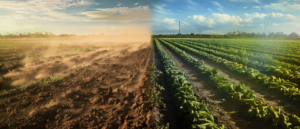
The table below shows how precise fertigation compares with conventional practice in terms of nutrient uptake, labor requirement, and long-term cost per ton of produce.
| Factor | Traditional Fertilization | Smart Nutrient Injection |
|---|---|---|
| Nutrient Uptake | Low and unstable; surface application | High and consistent; root-zone delivery |
| Fertilizer Waste | Up to 30–50% lost | Minimized through controlled dosing |
| Labor Requirement | Manual application, high labor cost | Automatic programs, lower labor cost |
| Environmental Impact | Runoff and groundwater pollution risk | Reduced runoff and emissions |
| Long-Term Cost | Low upfront, higher cost per ton | Higher upfront, lower cost per ton |
III. What Is a Fertigation System?
A Fertigation System is an integrated package of fertilizer tanks, dosing pumps, filters, valves, sensors and an electronic controller. Concentrated nutrients are injected into the mainline to reach target EC and pH values, so that each irrigation event also becomes a feeding event.
Instead of a few heavy applications during the season, nutrients are supplied in small, frequent doses following the crop’s uptake curve. This protects the root system, avoids salt build-up in the soil or substrate, and supports both yield and quality in high-value crops.
IV. Industry Trends & Application Value
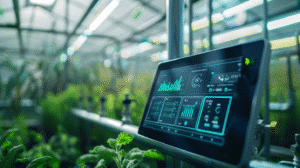
Global agriculture is moving toward precision resource management. The Food and Agriculture Organization (FAO) highlights efficient use of water and fertilizers as a key strategy for sustainable food production. Automated fertigation directly supports this goal by improving the efficiency of every drop of water and every kilogram of nutrient.
- Rising input prices push farms to reduce waste and track real costs.
- Stricter environmental rules limit nutrient runoff and over-application.
- Greenhouse and orchard expansion requires precise nutrient control.
- IoT, sensors, and automation make operation easier than before.
V. Core Functions of the System
- Real-time monitoring: EC, pH, flow, and tank levels.
- Automated dosing: precise injection of concentrated nutrients.
- Programmable irrigation: scheduled irrigation and feeding cycles.
- Remote access: control via phone or PC using secure connections.
- Data logging: detailed records for cost analysis and traceability.
When combined with drip irrigation, this equipment becomes the heart of precision irrigation and precision nutrition in a single pipeline.
VI. How to Select the Right Solution
Not all projects need the same level of automation. When planning an investment, consider:
- Crop type, planting area, and target yield per hectare.
- Irrigation method: drip, micro-sprinklers, sprinklers, or ebb-and-flow benches.
- Water quality and whether pre-filtration or treatment is required.
- Required automation level and integration with climate control systems.
- Budget and expected payback period.
- Supplier experience, training, and long-term technical support.
For technical details and specifications, visit the Haishun smart fertigation product page .
VII. Common Issues & Practical Solutions
- Clogging: install proper filters, flush lines regularly, and avoid incompatible fertilizer mixes.
- Sensor drift: calibrate EC and pH probes using standard solutions according to the manual.
- Nutrient imbalance: adjust recipes based on water, soil, and leaf tests.
- Power outages: use alarms and backup plans during sensitive growth stages.
- Operator errors: provide clear procedures and training for the team.
VIII. Fertilizer Efficiency & Sustainability
By matching nutrient supply with crop demand, automated fertigation can significantly increase fertilizer-use efficiency. Many growers see reduced input consumption per ton of produce while achieving more uniform crops and better quality.
At the same time, lower runoff and leaching help protect local water bodies and support compliance with environmental rules. This makes nutrient-injection technology a key tool for both profitability and sustainable agriculture.
You can find more case studies and tips in the Haishun agriculture tips blog.
IX. Why Choose Haishun Solutions?
Haishun focuses on integrated irrigation and fertigation packages for professional growers. Working with our team gives you:
- Experience in greenhouse, orchard, and open-field projects across multiple regions.
- Turnkey packages including filtration, valves, drippers, and dosing equipment.
- Export know-how for packing, documentation, and logistics.
- Basic fertigation recipes plus remote technical support during installation.
- Long-term spare parts and upgrade options for future expansion.
If you are planning a new project or upgrading your current irrigation, Haishun can help you turn fertilizer costs into predictable, profitable returns.
X. FAQ
1. What is the main advantage of a Fertigation System?
The main advantage of a Fertigation System is precise nutrient delivery to the root zone, which reduces fertilizer waste and supports higher, more uniform yields.
2. Can one unit serve multiple irrigation zones?
Yes. If correctly sized and equipped with valves and controllers, a single installation can feed several zones with different schedules and nutrient recipes.
3. How quickly can growers see benefits?
Many growers notice better uniformity and reduced fertilizer use within the first season, although the exact payback period depends on crop value and project scale.
4. What maintenance is required?
Regular filter cleaning, line flushing, pump inspection, and EC/pH sensor calibration are needed to keep the equipment running reliably for many years.