
Smart Fertigation System Guide: Implementing Precision Irrigation for Large-Scale Farms
Large-scale farming faces constant pressure to increase yields while using less water, less fertilizer, and fewer labor hours.A well-designed smart fertigation system turns irrigation into a precise, data-driven process instead of a manual routine.
This smart fertigation system guide helps farm owners and agri-engineers understand how to automate water and nutrient delivery so that large farms can improve profitability and sustainability at the same time.
Throughout this smart fertigation system guide, we explain how smart fertigation works, why it matters for large-scale farms, and how to choose and implement the right system for your operation.It is written for commercial farm owners, agronomists, project developers, and investors who want practical, implementation-ready guidance rather than theory.
Table of Contents
- I. Smart Fertigation System Guide: Introduction and Background
- II. Core Functionality of Smart Fertigation Systems
- III. Key Considerations When Choosing a Smart Fertigation System
- IV. Implementation Steps and Design Best Practices
- V. Solving Common Production and Operation Problems
- VI. Smart Fertigation System vs. Traditional Methods
- VII. Smart Fertigation System Guide: Summary and Recommendations
- VIII. Frequently Asked Questions (FAQ)
I. Smart Fertigation System Guide: Introduction and Background

In traditional large-scale farming, irrigation and fertilizer application are often handled separately.Irrigation is governed by timers or manual decisions, while fertilizers are broadcast over the field with limited precision.
A smart fertigation system combines and automates these operations, delivering water and nutrients together according to real-time crop needs.
For readers of this smart fertigation system guide, this is the key starting point for modernizing irrigation.
| Factor | Traditional Farming | Smart Fertigation System |
|---|---|---|
| Irrigation Control | Manual / timer-based, uniform for large blocks | Sensor-driven, zone-specific schedules |
| Nutrient Dosing | Broadcast application, inefficient uptake | Precise injection, optimized uptake |
| Water Usage | High, with runoff and evaporation losses | Reduced, minimized waste |
| Fertilizer Usage | High, uneven distribution | Lower, targeted delivery to root zone |
| Labor Costs | High, heavy manual involvement | Lower, automated operations |
| Yield Potential | Moderate and variable | Higher and more stable |
| Environmental Impact | Higher risk of leaching and runoff | Reduced losses and more sustainable |
What Is a Smart Fertigation System?
A smart fertigation system is an automated irrigation and nutrient-injection solution that uses sensors, controllers, and data analytics to deliver the right amount of water and fertilizer at the right time.
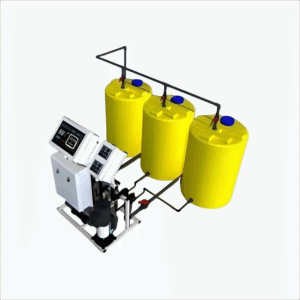
It typically includes soil moisture and EC sensors, a central controller with custom programs, fertilizer tanks and dosing pumps, and connections to existing pumps, filters, and irrigation infrastructure.
Any smart fertigation system guide must emphasize this integrated view: hardware, software, and agronomy working together.
According to organizations such as the Food and Agriculture Organization (FAO), fertigation is one of the most effective ways to improve nutrient use efficiency and reduce environmental impact.
For large farms using drip irrigation tape and commercial greenhouses, a smart fertigation system is quickly becoming a standard choice, and this smart fertigation system guide shows how to apply it step by step.
II. Core Functionality of Smart Fertigation Systems
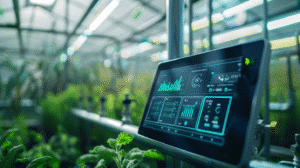
For large-scale operations, the core value of a smart fertigation system lies in its ability to connect data with action.
This smart fertigation system guide highlights the most important functionalities that help big farms move from manual routines to repeatable, automated programs:
- Real-time monitoring of soil moisture, EC, pH, flow, and sometimes plant vigor.
- Automated irrigation scheduling based on sensor readings, crop stages, and weather forecasts.
- Precise nutrient dosing by injecting fertilizers into irrigation water according to set recipes.
- Zone-specific control for multiple blocks or crops across a large farm.
- Remote management through smartphone, tablet, or PC dashboards.
- Data analytics and reporting on water use, fertilizer consumption, and system performance.
- Integration with farm management platforms for unified decision-making.
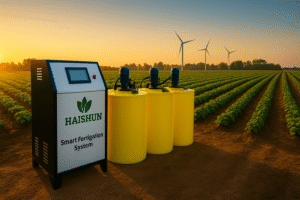
Haishun’s Smart Fertigation System is designed to integrate with existing large-scale irrigation infrastructure, whether the farm relies on drip, micro-sprinklers, or a combination of methods.
As this smart fertigation system guide explains, integration is often the fastest way to upgrade an existing project without rebuilding the entire irrigation network.
III. Key Considerations When Choosing a Smart Fertigation System
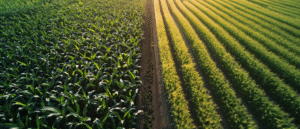
Selecting the right solution is at the heart of any smart fertigation system guide.
The following considerations should be part of every evaluation for large-scale projects:
1. Farm Size and Layout
- Total irrigated area, number of zones, and hydraulic layout.
- Mix of crops, elevations, and field shapes.
- Potential expansion in the next three to five years.
2. Crop Types and Nutrient Requirements
- Perennial crops (orchards, vineyards) vs. annual field crops and vegetables.
- Differences in nutrient demand across growth stages and seasons.
- Need for multiple fertilizer channels (N, P, K, micronutrients, acid).
3. Water Source and Quality
- Source: well, canal, reservoir, reclaimed water, or municipal supply.
- EC, pH, hardness, iron, and particle load that affect clogging and corrosion.
- Filtration and pre-treatment needs, such as sand filters or disc filters.
4. Automation and Integration Capabilities
- Time-based vs. sensor-based control strategies.
- Compatibility with existing pumps, valves, and control hardware.
- Interfaces and protocols for integration with farm management software.
5. Data Analytics and Reporting
- Dashboards and historical data for water and fertilizer use.
- Tools for benchmarking yield versus input use across seasons and fields.
- Export options for agronomic analysis and compliance reporting.
6. Technical Support, Training, and Budget
- Commissioning assistance, operator training, and ongoing support.
- Spare parts, local partners, and remote diagnostics.
- Initial investment vs. expected ROI over multiple seasons.
A serious smart fertigation system guide should encourage buyers to request not only quotations, but also hydraulic drawings, wiring diagrams, and clear service commitments from suppliers such as Haishun.
IV. Implementation Steps and Design Best Practices
Successful implementation of a smart fertigation system on a large farm requires both technical and organizational preparation.
This part of the smart fertigation system guide outlines a typical process from first assessment to continuous improvement:
Step 1: Baseline Assessment
- Map existing irrigation infrastructure, pumps, filters, and mainlines.
- Collect water analyses and current fertilization practices.
- Record yield history and major crop constraints such as salinity, drought, or labor shortages.
Step 2: System Design and Sizing
- Define required flow rates and pressures for each zone.
- Select the number and capacity of fertilizer tanks and dosing pumps.
- Specify sensors (moisture, EC, pH, flow, pressure) and their locations.
Step 3: Installation and Commissioning
- Install the fertigation skid near the main pump station for easy access and safety.
- Connect dosing lines, sensors, and communication cables according to wiring diagrams.
- Commission the system with clean water first, then with fertilizer solutions.
Step 4: Programming and Calibration
- Set irrigation programs by crop and zone, including triggers and safety limits.
- Calibrate dosing pumps and EC/pH sensors for accuracy.
- Test emergency routines, alarms, and power-failure behavior.
Step 5: Training and Continuous Improvement
- Train operators on daily checks, basic troubleshooting, and data interpretation.
- Use reports to refine schedules, recipes, and setpoints over time.
- Review performance annually and adjust design as the farm evolves.
When followed carefully, these steps turn a smart fertigation system guide into a real-world roadmap that farms can execute with confidence.
V. Solving Common Production and Operation Problems
Even robust systems can face challenges under real-world conditions.
This section of the smart fertigation system guide summarizes typical problems and practical solutions:
| Problem | Typical Cause | Recommended Solution |
|---|---|---|
| Clogged emitters | Poor filtration, high sediment, precipitation of fertilizers | Upgrade filtration, flush lines regularly, use compatible water-soluble fertilizers. |
| Uneven water distribution | Incorrect pressure regulation, wrong emitter selection, leaks | Check pressure in each block, redesign piping where needed, repair leaks. |
| Incorrect nutrient levels | Improper recipes, dosing pump miscalibration, sensor drift | Test soil and water regularly, recalibrate pumps and sensors, adjust recipes by crop stage. |
| System malfunctions | Lack of maintenance, electrical issues, software misconfiguration | Implement preventive maintenance, follow inspection checklists, and keep firmware updated. |
| Data overload | Too many indicators without clear priorities | Focus on key KPIs (EC, moisture, yield), train staff on basic data interpretation, work with agronomy experts. |
VI. Smart Fertigation System vs. Traditional Methods
For large-scale farms, the difference between traditional irrigation and a smart fertigation system is most visible in resource use and yield stability.
This smart fertigation system guide uses the following table to highlight key contrasts:
| Feature | Traditional Irrigation & Nutrient Dosing | Smart Fertigation System |
|---|---|---|
| Precision | Low; difficult to match crop stages | High; sensor-driven, stage-specific dosing |
| Automation | Minimal; manual decisions | High; programmable logic and alarms |
| Water Usage | High; risk of over-irrigation | Optimized; based on real-time needs |
| Fertilizer Usage | High; uneven distribution | Lower; targeted fertigation |
| Labor Costs | High; repetitive manual tasks | Lower; operators supervise instead of apply |
| Yield Potential | Moderate and variable | Higher with better stability |
| Environmental Impact | Higher risk of leaching and pollution | Reduced losses and more sustainable |
| Data-driven decisions | Limited insights | Extensive, real-time decision support |
VII. Smart Fertigation System Guide: Summary and Recommendations
-300x168.png)
Smart fertigation systems are reshaping large-scale agriculture by combining precise irrigation control with targeted nutrient delivery.When properly designed and implemented, a smart fertigation system can increase yields, reduce water and fertilizer costs, and strengthen environmental performance across the entire farm.
This smart fertigation system guide has walked through the main concepts, choices, and steps involved.
For farm owners and agri-engineers planning an upgrade, key steps include a thorough baseline assessment, careful system sizing, disciplined commissioning, and continuous training.Working with a reliable technology partner is essential to converting investment into sustainable results.
Haishun Smart Agriculture focuses on integrated solutions for large-scale farms, from smart fertigation systems and commercial hydroponic systems to modern greenhouses.Use this smart fertigation system guide together with Haishun’s engineering support to design a solution tailored to your fields, crops, and budget.
To discuss your project or request a preliminary design, visit our Contact page.
VIII. Frequently Asked Questions (FAQ)
1. What is a smart fertigation system in simple terms?
A smart fertigation system is a combination of irrigation and fertilizer injection controlled by sensors and a central controller.
Instead of applying water and nutrients separately and manually, the system delivers them together through the irrigation network according to crop needs, saving time and resources while improving crop performance.
2. Is a smart fertigation system only suitable for high-tech greenhouses?
No. While smart fertigation started in high-tech greenhouses, today it is widely used in orchards and open-field farms as well.
As long as the farm has a structured irrigation network, a smart fertigation system can be designed to match its scale and complexity, from single-crop blocks to diversified operations.
3. How much water and fertilizer can a large farm save with smart fertigation?
Actual savings depend on climate, soil type, and previous practices, but many large-scale farms report double-digit reductions in water and fertilizer use once a smart fertigation system is fully optimized.
Savings come from fewer over-irrigation events, uniform application, and better matching of nutrient supply to crop demand across the season.
4. What skills do farm staff need to operate a smart fertigation system?
Operators need basic understanding of irrigation, fertilizers, and system safety.
With a user-friendly interface, most daily tasks involve checking alarms, confirming system status, and reviewing reports.
Haishun provides training so local teams can handle routine tasks, while more complex configuration and troubleshooting can be supported remotely.
5. How long does it typically take to implement a smart fertigation system on a large farm?
Timeframes vary by project size and infrastructure readiness.
Small retrofits may take a few weeks from design to commissioning, while large multi-block projects can require several months.
Good planning, clear communication, and phased implementation help minimize disruption to ongoing production cycles.
6. What is the expected payback period for a smart fertigation investment?
For many large-scale farms, the payback period ranges from two to four seasons.
The main contributors are higher yields, more consistent quality, lower water and fertilizer use, and reduced labor costs.
Including the value of fewer crop failures and better market positioning can shorten the payback even further.
7. Why should large farms consider Haishun as a technology partner?
Haishun combines export experience with practical field knowledge in smart irrigation and fertigation.
Each smart fertigation system is designed around the farm’s water source, crops, and budget rather than a one-size-fits-all model.
With modular hardware, remote support, and integration options for greenhouses and open-field operations, Haishun aims to be a long-term partner in building resilient and profitable farms.